
Geography and context
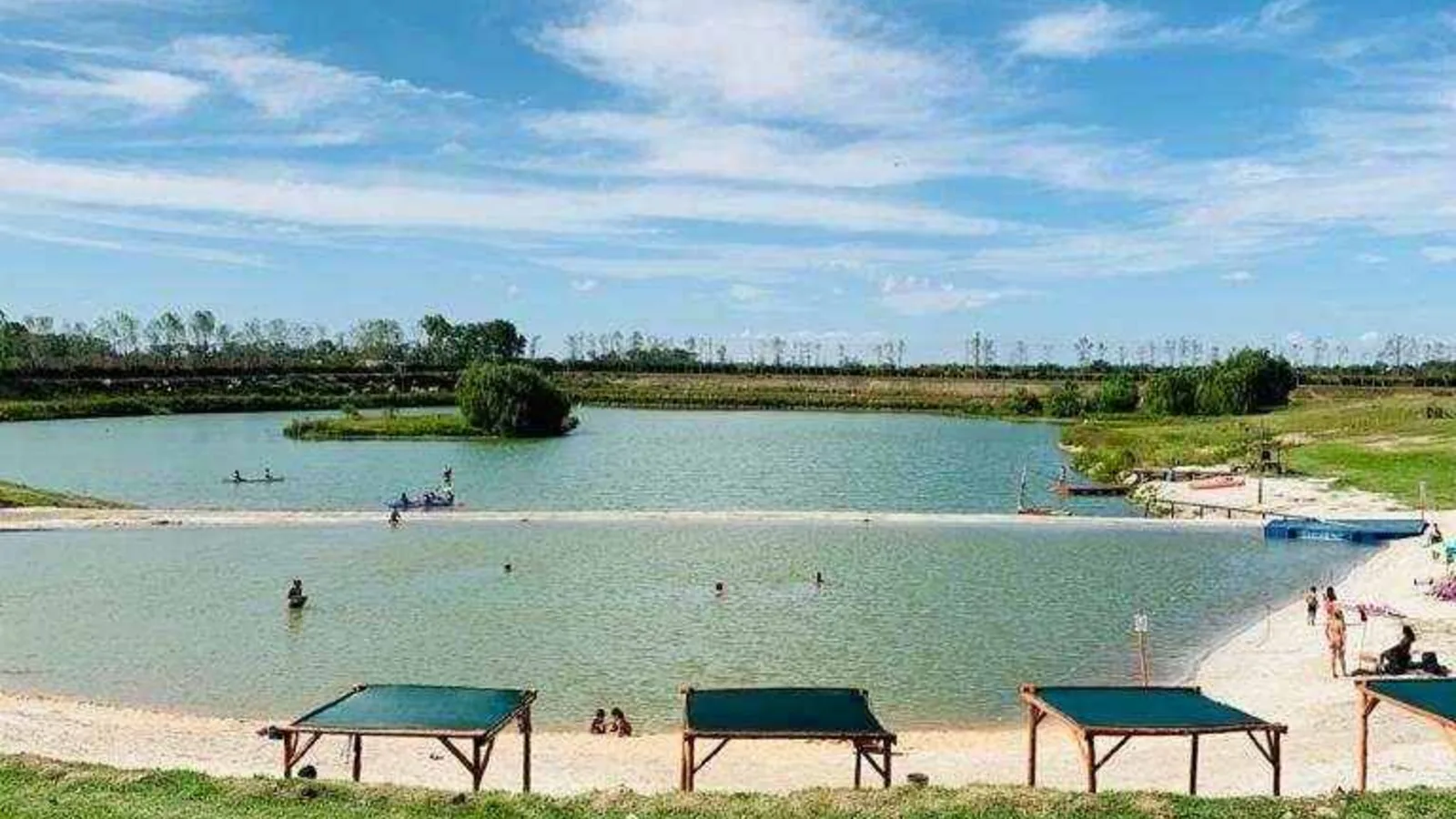
40 to 50 km from central Buenos Aires, in Tristán Suárez (Ezeiza district) and Pilar, several flooded quarries are used by local dive schools as training sites. They are tosqueras — quarries cut into tosca, a calcareous sedimentary stone — and have become the main reference for certifications and check-outs in the metropolitan area.
Because of the bottom material, tosqueras have lower visibility than granite quarries (Tandil, Olavarría, Curuzú Cuatiá): tosca releases fine particles that cloud the water easily.
What you’ll see
Ezeiza and Pilar quarries are training sites, not tourism destinations. They are used for:
- PADI/SSI/CMAS courses up to Open Water and Advanced level
- Equipment check-outs and gas review before trips to open-water sea destinations or more exposed sites
- Skills practice in controlled water
Site conditions:
- Average depth: 10 to 14 metres
- Visibility: 1 to 6 metres, depending on water turnover and plankton
- Worse visibility in summer: plankton bloom reduces transparency
There is no remarkable wildlife beyond a few freshwater fish. The interest is functional, not scenic.
When to go
Visibility is best in autumn and winter when plankton drops. In summer it can fall to 1–2 metres. Water temperature follows ambient temperature, roughly 8 °C in winter to 22 °C in summer.
How to get there
Both sites lie inside Greater Buenos Aires. Tristán Suárez is reached via Ricchieri Highway and Route 205. Pilar via Acceso Norte (Panamericana). Dive schools in the city and suburbs handle transfers as part of their courses.
Access and regulations
Quarry access is coordinated by the schools that use them. They are not open-access sites: there are private owners who authorise entry by agreement. Activity requires a certified instructor.
Technical tips
The most accessible diving for divers based in Buenos Aires and the surrounding area. Pilar quarries typically have better visibility than those in Ezeiza; check with the operator which site has better conditions on the day before choosing. The autumn-winter season (April–August) offers visibility of 8–12 metres, noticeably better than summer, when algae can reduce it to 2–3 metres. Some quarries have submerged artificial structures — cars, boats — that add interest for underwater photography. Tosca releases particles more easily than granite, so buoyancy control matters. If you don’t have your own gear, Oceánica Buceo rents wetsuits, regulators and BCDs.
Sources
- Oceanica Buceo — Ezeiza and Pilar lakes (location, depth, visibility, distance from CABA, tosca vs granite)