Scuba Diving Gear Guide
Everything you need to know to choose your gear, from open water to technical diving. No prices: the focus is on technical characteristics and use cases.
Masks
The mask is the first piece of gear you'll buy and the most personal: a good seal depends on your facial anatomy, not the model. Always try it before purchasing. To test the seal, place the mask on your face without the strap, inhale gently through your nose — if it stays without external support, the seal is correct.
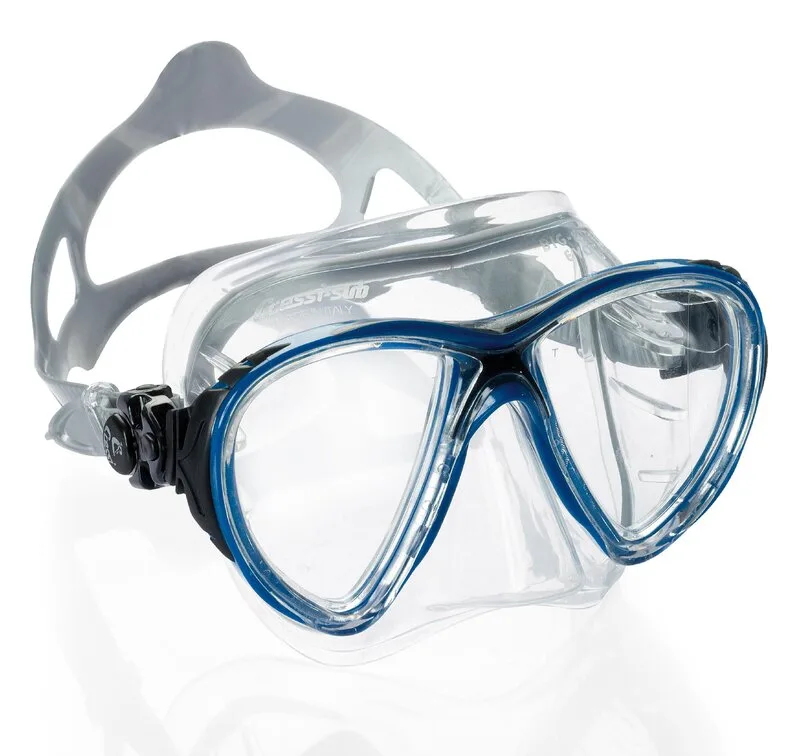
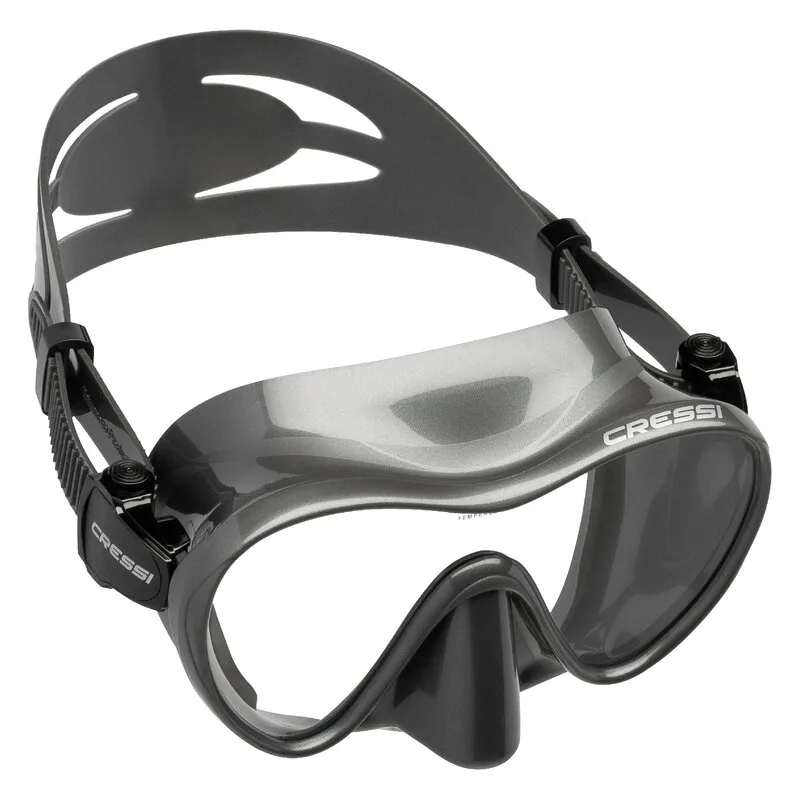
The two most important parameters are internal volume and field of vision. Low volume (under 100 cm³) means less air needed to equalize with depth — an advantage in freediving and deep dives — but usually comes with a somewhat reduced inferior field of view. Medium-volume masks like the Big Eyes Evolution widen the lower field of vision through angled lens technology, at the cost of higher volume. For standard recreational diving, either option works well; final choice is comfort and preference.
Single-lens masks have no central blind spot but do not accept individual corrective lenses per lens. Dual-lens masks accept spherical corrective lenses (myopia), available as an accessory for several Cressi and Mares models.
Fins
Fins are divided into two main families based on foot attachment. Shoe fins (full foot) are worn barefoot or with a thin neoprene sock (1–3 mm): they are lighter and more compact, ideal for destinations where air travel is a factor. Open-heel fins are worn with 3–7 mm booties and an adjustable heel strap: the standard choice for cold-water diving such as Patagonia or the Andean lakes, where thick booties are part of the thermal management system.
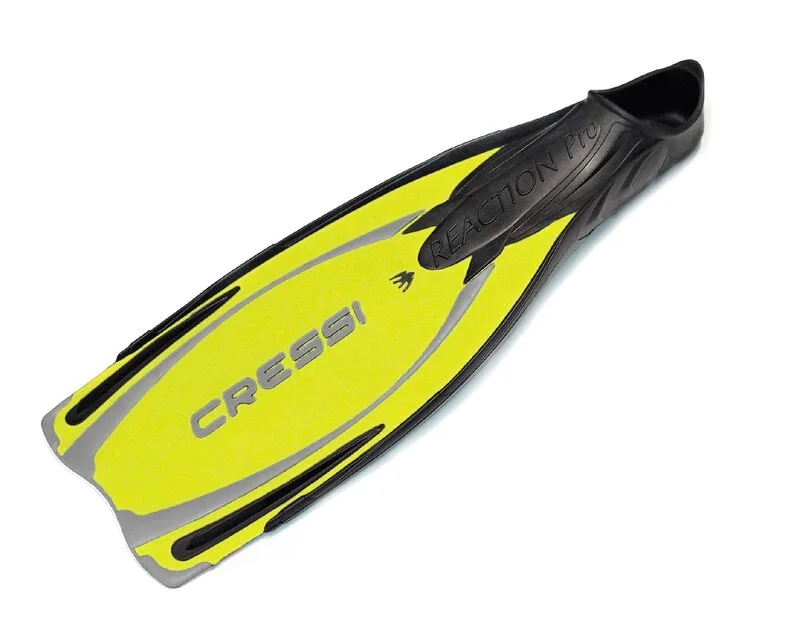
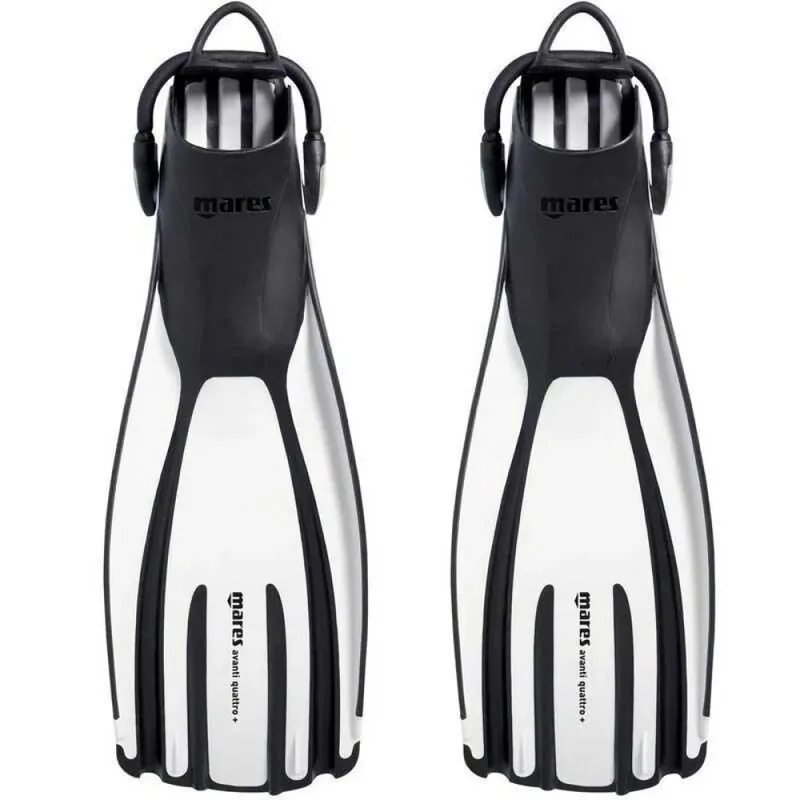
Blade stiffness determines kicking efficiency based on kick style. For flutter kick (the classic alternating kick), stiffer blades transfer more energy. For frog kick (standard in technical and cave diving), medium stiffness and blade geometry matter more than raw power. Channel fins like the Mares Avanti Quattro+ are optimized for flutter kick with full gear; polypropylene fins like the Cressi Reaction Pro work best at higher-frequency flutter.
For beginners: any open-heel fin from a recognized brand in the correct size is sufficient. Don't oversize the blade — very large, stiff fins cause muscle fatigue and are counterproductive for newcomers. Bootie fit inside the pocket is critical; a fin that moves is a fin that hurts.
Wetsuits & Drysuits
The wetsuit is your primary thermal management system underwater. The right choice depends on water temperature, dive duration, and how frequently you dive at that temperature. Hypothermia is the most common cause of premature dive termination and poor underwater decision-making.
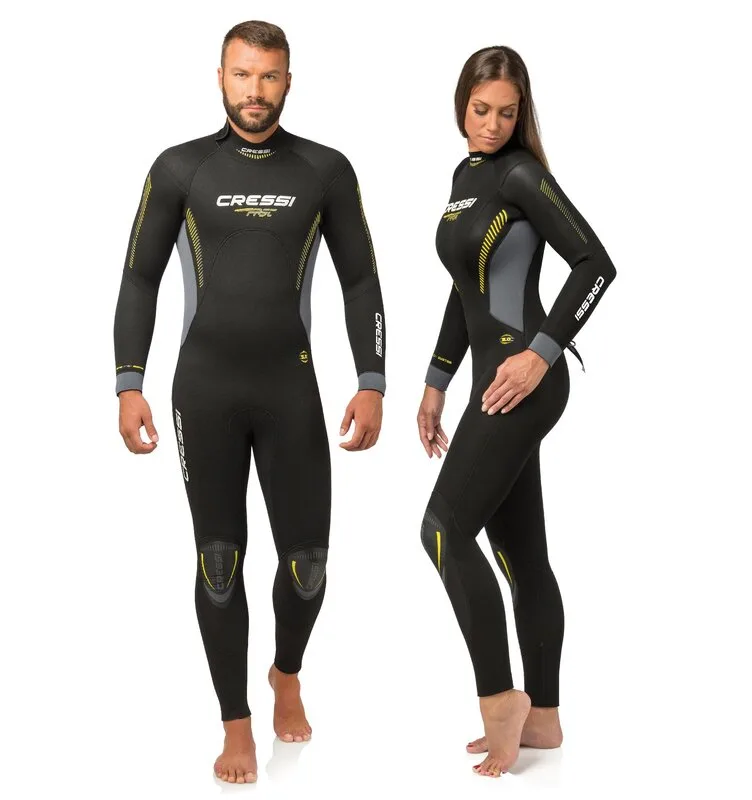
Wetsuits: water enters the suit, is warmed by body heat, and acts as insulation. Neoprene thickness determines the effective temperature range: 3 mm for 22–27 °C, 5 mm for 17–22 °C, 7 mm for 12–17 °C. Modular designs like the Cressi Fast 5mm let you combine pieces to tune thermal protection. Not effective below 10–12 °C in extended exposure.
Semi-drysuits: tighter seals at wrists, ankles, and neck reduce water circulation inside the suit, keeping the trapped water warmer for longer. The usual choice for Patagonian diving (10–15 °C). Drysuits: no water enters; insulation is provided by thermal undergarments. Standard for diving below 10 °C and require specific training (drysuit specialty courses are offered by most certification agencies).
BCDs — Buoyancy Compensators
The BCD (Buoyancy Compensator Device) lets you control your buoyancy underwater by inflating or deflating an air bladder. A properly fitted BCD makes diving more comfortable, more air-efficient, and safer.
BCDs differ mainly by their inflation geometry: jacket style (bladder wraps around torso, distributes buoyancy laterally and anteriorly — the most common for recreational diving), back inflation (bladder inflates only at the back, creating a more horizontal trim underwater — preferred for technical and photography diving), and wing (rear wing bladder mounted on a metal backplate — standard for technical double-cylinder diving). For open water and recreational diving to 40 m, jacket BCDs are the easiest to use and most widely available.
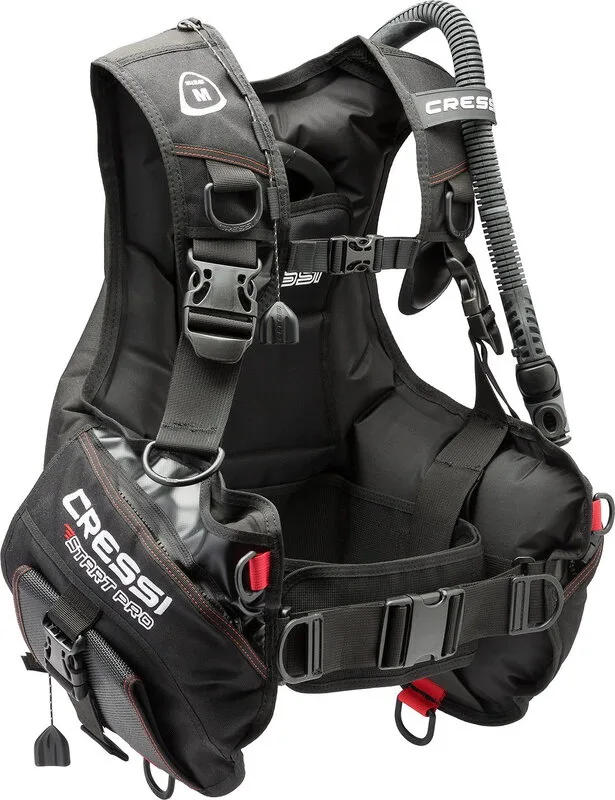
Weight integration also matters: entry BCDs like the Cressi Start Pro use a separate weight belt, while mid-range and advanced models include integrated quick-release weight pockets — very useful in surface emergencies. Bladder volume should match your suit thickness: drysuit or 7 mm wetsuit diving needs higher lift capacity.
Regulators
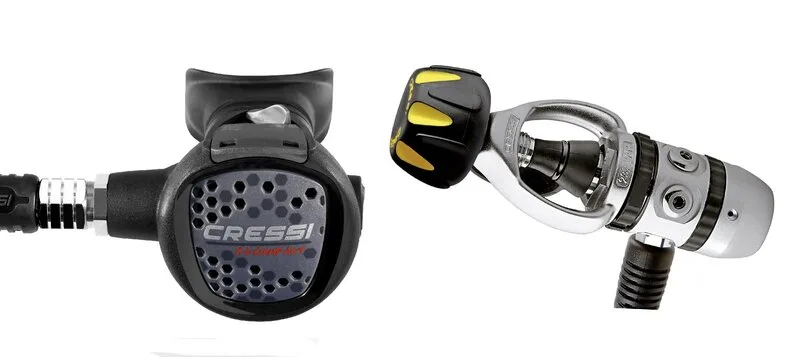
The regulator converts compressed cylinder air (150–300 bar) into breathable air at ambient pressure. A quality, well-maintained regulator is the most safety-critical piece of gear in the system. General rule: buy the best regulator within your level budget, and never skip the annual service.
The first stage connects to the cylinder and reduces pressure to an intermediate level (8–10 bar). Piston designs are simpler and less expensive to service; diaphragm designs are more consistent in cold water and at greater depth. Environmentally sealed (dry sealed) models perform well in cold water and maintain performance as cylinder pressure drops. Unsealed models like the Cressi AC2 are more economical and adequate for recreational diving in warm and temperate water.
The second stage (mouthpiece) delivers air at ambient pressure. Key parameters are inhalation effort, maximum flow rate, and venturi adjustment range. For technical or cold-water diving, a regulator certified to EN250A (cold water) is required. For standard recreational diving in Argentina, entry-level sets are adequate with annual servicing.
Dive Computers
A dive computer calculates real-time no-decompression limits (NDL) based on its algorithm, current depth, and the day's dive history. It is essential safety equipment: diving without a computer means following fixed tables that are always more conservative, reducing available bottom time, or assuming risk if tables are misapplied.
The most common algorithms are Bühlmann ZHL-16C (and variants) and the Wienke RGBM. Practical differences for recreational diving are small; what matters is choosing a computer and using it consistently — never mixing algorithms between dives in the same day. Modern computers allow adjusting the conservatism factor.
For entry-level divers (recent open water certification, under 50 dives), simple 1–2 button computers like the Suunto Zoop Novo, Mares Puck Pro+, or Aqualung i330R are the right choice: clear interface, conservative algorithm, adequate logbook. For intermediate level (nitrox, multiple daily dives, wall diving), nitrox support is key — nearly all current computers have it. For advanced/technical level, computers like the Shearwater Tern or Teric allow multi-gas, trimix, pressure integration, and customizable decompression logic.
Bluetooth connectivity for log transfers to phone or PC has become standard in post-2020 models; avoid proprietary cable-only models if you plan to actively track your dives. Wireless air integration (tank pressure transmitter) is available on intermediate and advanced models; it adds real value but is not essential at the start.