
Geography and context
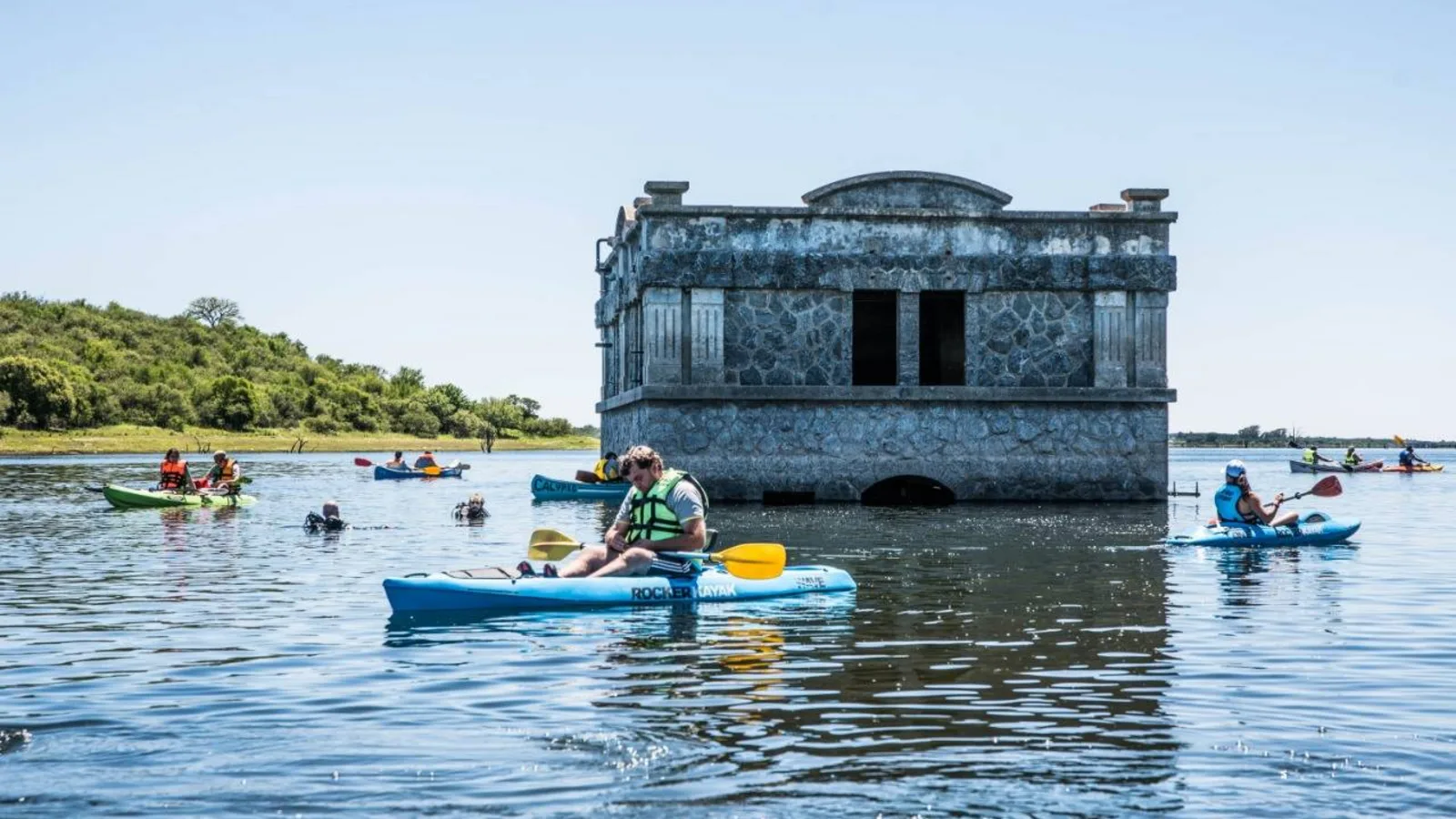
Piedras Moras Reservoir sits on the Ctalamochita River (also known as the Tercero), 2 km from the town of Almafuerte and 101 km from Córdoba city. The reservoir was inaugurated in 1979 and covers between 600 and 900 hectares. Maximum depth reaches 34 metres.
It is one of the very few sites in Argentina where divers can explore a complete submerged village: Salto Norte, expropriated during the dam’s construction and submerged when the reservoir was filled.
What you’ll see
More than 30 metres below the surface, structures of the old village remain intact: the San José Church with its bell tower, the cemetery, estancia houses, the Soconcho stream bridge, and remains of the La Cascada power station. Reaching the main buildings requires prior experience and always an instructor on the dive.
The shallower zones host typical Córdoba freshwater fish: silversides, dientudos and carp. Wildlife is not the main attraction; divers come for the historic and archaeological character of the site.
The bottom is silty mud, which demands solid buoyancy control to avoid stirring up sediment and reducing visibility. Site limits:
- Maximum visibility: 5 metres
- Temperature: 10 °C in winter, 25 °C in summer
- Maximum reservoir depth: 34 m
When to go
Best season is summer and early autumn — comfortable water temperature and better visibility. In winter the temperature drops to 10 °C and a drysuit or semi-dry is recommended. Trips are coordinated with operators based in Córdoba city.
How to get there
Almafuerte lies on Provincial Route 6, 101 km from Córdoba city and 25 km south of Río Tercero. The reservoir has boat access points and tourism services. The town offers hotels and campsites.
Access and regulations
Diving is authorised and always done with certified professionals. Trips are arranged by operators in Córdoba city. It is not a self-guided diving site: the depth of the most interesting points (church, power station) and the muddy bottom make local guidance essential.
Technical tips
Visibility is best in winter (June–August): algae blooms — not sediment — are the main cause of turbidity in summer. Water temperature drops to 15–16 °C in this period, so a 7 mm wetsuit is advisable. Submerged structures from the old village are found in the area of the former shoreline at mid-range depths (8–15 m); exploring them requires good buoyancy control to avoid disturbing the silty bottom. The reservoir is calm and sheltered — no currents or waves — making it a solid choice for a first lake dive for divers from Buenos Aires or Córdoba. This is not a self-guided site: always coordinate with a local operator who knows the dive points and current bottom conditions.
Sources
- Wikipedia — Dique Piedras Moras (geography, depth, year of completion, dive conditions)
- Diques de Córdoba — Piedras Moras (visibility, temperature, bottom)
- Córdoba Turismo — Piedras Moras dive site (submerged village structures, regulation)